How Much Do Solar Panels Cost in Ireland in 2026? (And When You'll Actually Break Even)
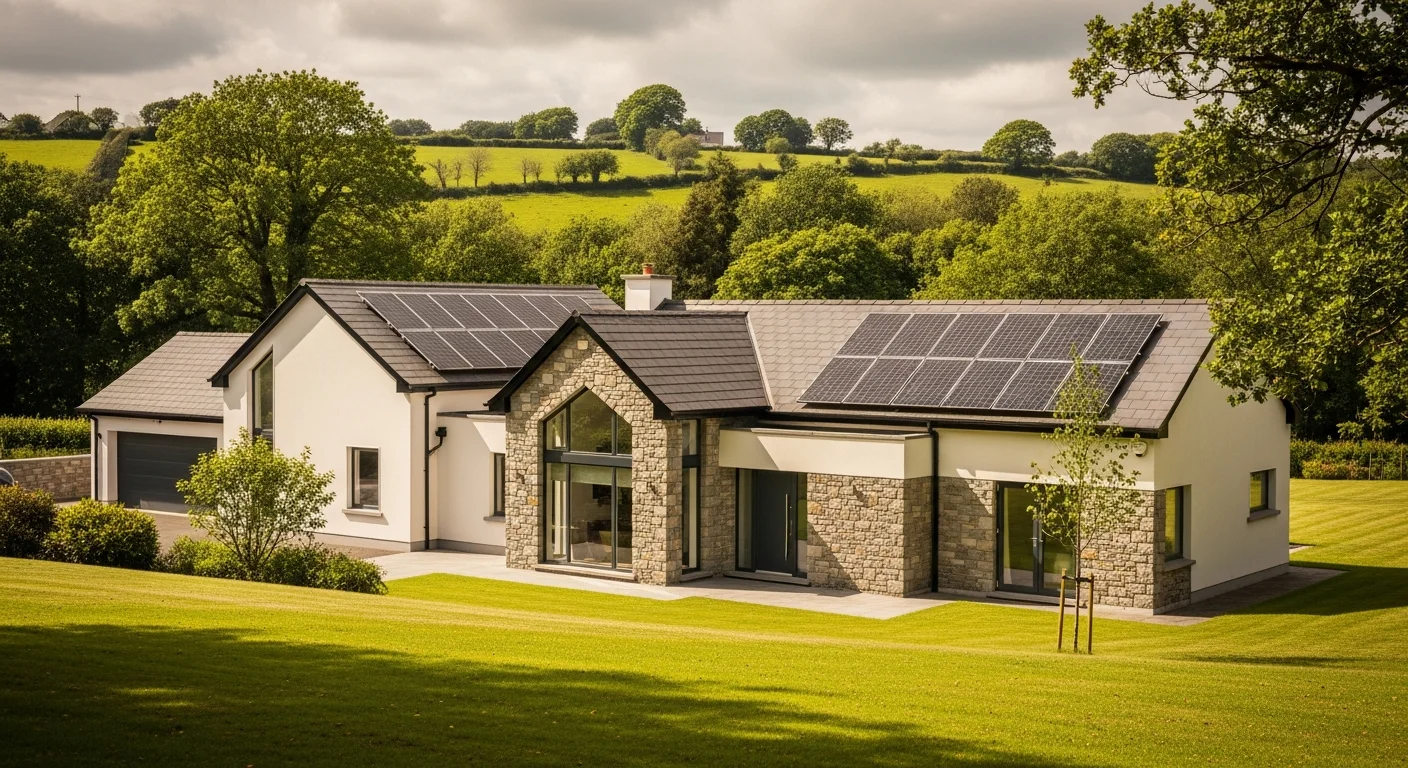
Most people Googling "solar panel cost Ireland" get one of two results: a quote-form landing page that tells you nothing until you hand over your phone number, or a vague "it depends, prices range from €5,000 to €15,000" answer that's technically true and practically useless.
Here's a straight version.
The numbers, in 2026 prices
A typical Irish three-bed semi-detached needs a solar PV system of around 4 kWp. That's roughly 8 to 10 panels on the roof. Installed, including the inverter, mounting, cabling, certification and VAT, you're looking at:
- 2 kWp system (small, low electricity user): €5,500 – €7,000
- 4 kWp system (typical 3-bed semi): €8,500 – €11,500
- 6 kWp system (larger family home, EV, heat pump): €12,000 – €15,500
- With a battery (5–10 kWh): add €3,500 – €6,500
These are real installed prices in early 2026 from SEAI-registered installers. Anyone quoting you €4,000 for a full installation is either using imported panels of unknown provenance, skipping certification, or planning to disappear after the deposit clears. Anyone quoting you €18,000 for a standard 4 kWp setup is taking the mickey.
What the SEAI grant takes off
The SEAI Solar PV grant in 2026 is up to €1,800 for a system of up to 4 kWp (roughly €700 per kWp for the first 2 kWp, €200 per kWp for the next 2 kWp). It's paid directly to you after the install is signed off and your BER is updated. To qualify, your home must have been built and occupied before 2021, and the installer must be SEAI-registered.
Always check seai.ie for the current grant rate before you sign anything — the scheme has been adjusted several times and the published rate is what matters.
What you'll actually save
A 4 kWp system in Ireland produces roughly 3,400 to 3,800 kWh of electricity per year, depending on roof orientation and shading. Of that:
- About 30–40% is used directly in the home — the highest-value chunk, because every kWh you self-consume saves you 30 cent or so at current rates
- The rest is exported to the grid, for which you receive the Microgeneration Support Scheme export tariff — around 18–24 cent per kWh in 2026, depending on your supplier
Roughly translated: a typical 4 kWp install saves an Irish household €900 to €1,300 a year off the electricity bill. Add a battery and you'll squeeze more out by storing daytime production for evening use — that pushes savings closer to €1,400–€1,600 a year.
The honest payback
Take €10,000 installed, minus €1,800 grant = €8,200 net. Save €1,100 a year. Payback: about 7–8 years for the panels alone, longer if you've added a battery (batteries are still the slowest piece of the puzzle to pay back — usually 10+ years on their own, though they earn their keep in resilience and bill control).
If a salesman tells you four years, ask them to show you the maths. Either they're assuming a 30% annual electricity price rise forever, or they're including the value of the grant and counting the battery as free. Both are dodges.
What actually matters when picking an installer
- SEAI registration. Mandatory for the grant. Check the register on seai.ie — don't take their word for it.
- A proper roof survey. Anyone quoting without coming to see your roof is guessing.
- The inverter brand. Inverters fail before panels do. Stick to Solis, SolarEdge, Fronius, Huawei, GoodWe — these have parts and service in Ireland.
- The warranty in writing. 25 years on panels, 10–12 on inverters, 2 on workmanship is the floor. Anything less is a flag.
- A timeline. A trustworthy installer will tell you "8–12 weeks from deposit." A shaky one will promise next month.
When solar makes sense, and when it doesn't
It makes sense if you own your home, have a south, east or west-facing roof with little shading, use most of your electricity during the day or are willing to shift habits, and plan to stay put for at least five to seven years.
It makes less sense if your roof is heavily shaded by trees or other buildings, you're planning to sell within a couple of years, your roof is north-facing, or you're a very light electricity user with an annual bill under €700.
The shortest possible advice
Get three quotes from SEAI-registered installers. Don't accept any quote that hasn't involved a real visit to your roof. Don't sign on the day. And ignore anyone whose pitch leans on "limited time pricing" or "we have one panel left in the warehouse" — that's double glazing tactics, not energy advice.
CleanEnergy.ie matches you with up to three vetted installers in your county. They quote, you compare, and there's no pressure to go ahead. Free for homeowners — always.