Solar Panels in Ireland: Costs, Grants & Savings in 2026
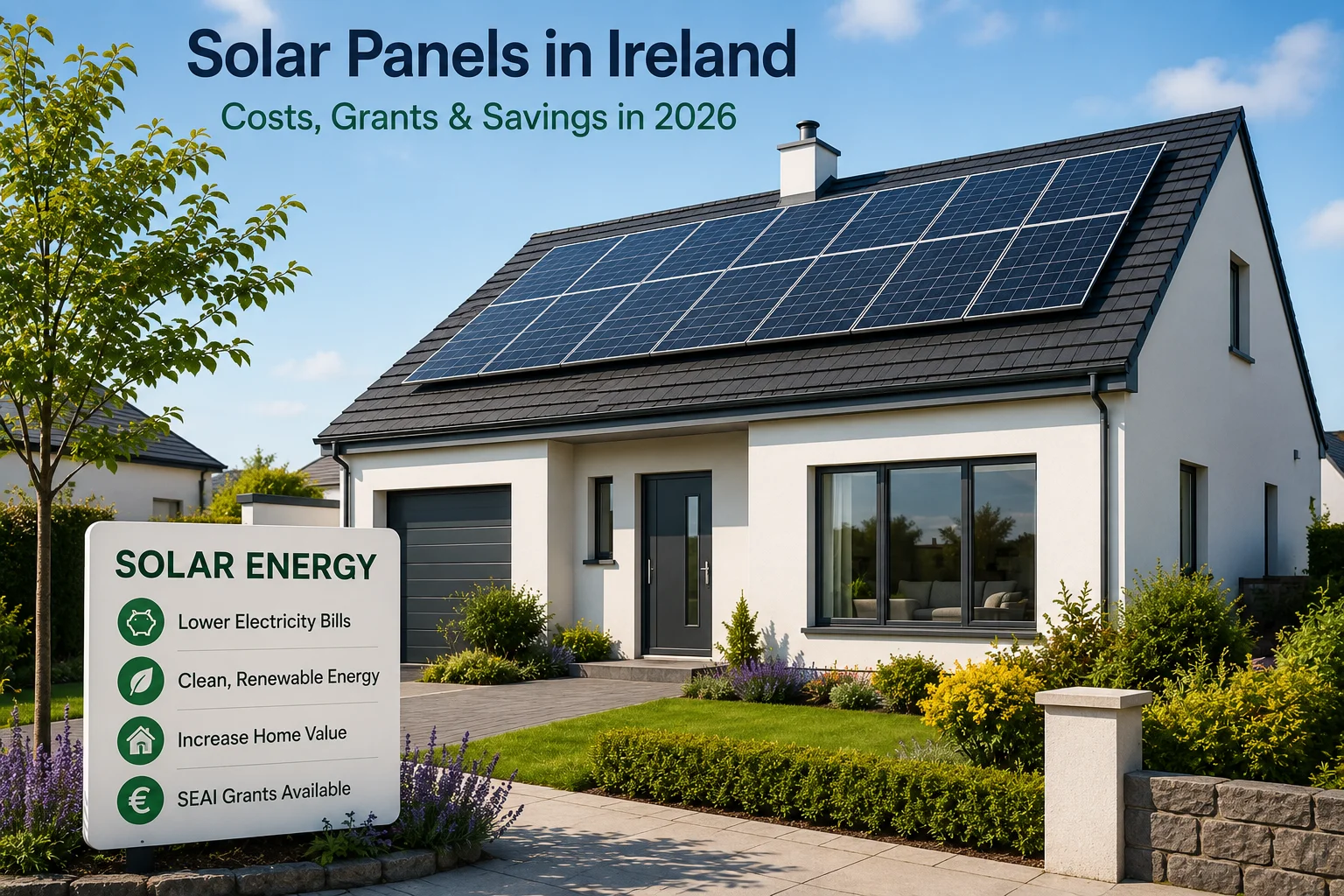
Solar panels have gone from being something you saw on the occasional eco-home to one of the most popular home improvements in Ireland.
And it's easy to see why.
Electricity prices have risen significantly over the last decade, solar technology has improved dramatically, and SEAI grants continue to reduce the cost of installation.
But are solar panels actually worth it?
How much do they cost?
How much electricity do they generate?
And will they work on an Irish roof with our famously unpredictable weather?
Let's take a look.
Are Solar Panels Worth It in Ireland?
For many homeowners, yes.
Modern solar panels generate electricity even on cloudy days, and Ireland receives enough daylight throughout the year for solar to make financial sense in many homes.
Solar panels can help:
- Reduce your electricity bills
- Lower your reliance on the grid
- Increase the energy efficiency of your home
- Reduce your carbon footprint
- Improve your home's BER rating
Most importantly, they allow you to generate some of your own electricity every day.
How Do Solar Panels Work?
Solar panels, or solar PV (photovoltaic) panels, convert sunlight into electricity.
The electricity generated can be:
- Used immediately in your home
- Stored in a battery (if you have one)
- Exported back to the electricity grid
Even on overcast days, solar panels still generate power.
Naturally, they produce more electricity during bright summer days than during winter months, but the technology is surprisingly effective in Ireland's climate.
How Much Do Solar Panels Cost in Ireland?
The cost depends on:
- The size of your system
- The number of panels installed
- Whether you include a battery
- The complexity of your roof
- The installer you choose
For a typical family home, solar installations commonly range from several thousand euros upwards.
Adding battery storage increases the cost but may improve your ability to use more of the electricity you generate.
The best approach is usually to get a number of quotes and compare:
- System size
- Expected electricity generation
- Warranty terms
- Installer reputation
- Total installed cost
Is There an SEAI Grant for Solar Panels?
Yes.
The SEAI offers grants towards the installation of solar PV systems for eligible homes.
The grant helps reduce the upfront cost of installation and has been a major factor in the growth of residential solar in Ireland.
Grant amounts can change over time, so it's worth checking the latest information before proceeding.
Your installer will usually explain:
- Whether your home qualifies
- How the grant process works
- What paperwork is required
How Much Could I Save?
This is the question everyone wants answered.
And the honest answer is:
It depends.
Savings depend on:
- How much electricity your household uses
- When you use it
- The size of your solar system
- Electricity prices
- Whether you have a battery
- How much electricity you export to the grid
Households that use more electricity during daylight hours often see greater savings.
For example:
- Working from home
- Charging an electric vehicle during the day
- Running appliances during sunny periods
can all increase the value of your solar system.
Will Solar Panels Work on My Roof?
In many cases, yes.
Solar panels work best when:
- The roof receives good sunlight.
- There is enough roof space.
- The roof is structurally sound.
South-facing roofs are often ideal.
However:
- East-facing roofs can still perform well.
- West-facing roofs can be very effective.
- Even roofs that aren't perfectly oriented can make financial sense.
A good installer will assess your roof and estimate how much electricity your system is likely to generate.
Should I Get a Battery?
Batteries are becoming increasingly popular.
A battery stores excess electricity generated during the day so you can use it later.
For example:
You generate electricity at lunchtime.
Instead of exporting it immediately to the grid, you store it and use it in the evening when the family comes home.
Advantages of battery storage include:
- Increased self-consumption
- Lower electricity bills
- Backup power in some systems
- Greater independence from the grid
The downside is simple:
Batteries cost extra.
Whether they make financial sense depends on your usage patterns and budget.
What Happens to Excess Electricity?
If your system generates more electricity than you use, the excess can be exported back to the grid.
Many electricity suppliers offer payments for exported electricity.
This means your solar system isn't just reducing bills.
It may also generate a small income stream.
The rates and terms vary between suppliers, so it's worth comparing options.
How Long Do Solar Panels Last?
Modern solar panels are remarkably reliable.
Many manufacturers offer warranties of:
- 20 years
- 25 years
- or longer.
In practice, solar panels often continue producing electricity long after their warranty period.
The amount of electricity they generate may gradually reduce over time, but the decline is usually slow.
Inverters, which convert the electricity into a usable form for your home, may need replacement earlier than the panels themselves.
What Are the Downsides?
Solar panels aren't perfect.
Potential drawbacks include:
Upfront cost
Although grants help, installing solar still requires an investment.
Roof suitability
Not every roof is ideal.
Shade from trees, chimneys or neighbouring buildings can reduce performance.
Seasonal variation
Solar generates more electricity in summer than winter.
You will still rely on the grid.
Complexity
Choosing between different installers, batteries and system sizes can feel overwhelming.
This is why many homeowners benefit from getting advice before making a decision.
Is Solar the First Upgrade I Should Make?
Not always.
If your home is poorly insulated, you may benefit more from improving:
- Attic insulation
- Cavity wall insulation
- Draught proofing
before investing heavily in solar.
A warmer, more energy-efficient home often gets more value from every unit of energy it generates.
That said, solar remains one of the most popular and straightforward energy upgrades available in Ireland.
Final Thoughts
Solar panels are no longer a niche technology.
They're a mainstream home improvement.
For many Irish homeowners, they offer:
- Lower electricity bills
- Government support through SEAI grants
- Reduced dependence on energy companies
- Greater control over household energy costs
The key is not to ask:
"Should everyone get solar?"
Instead ask:
"Would solar make sense for my home?"
The answer depends on your roof, your budget and how you use electricity.
But for a growing number of Irish households, the answer is yes.
And if you're curious, getting a few quotes and understanding your options is often the perfect place to start.