The Right Order to Do a Whole-Home Retrofit (Most People Get This Wrong)
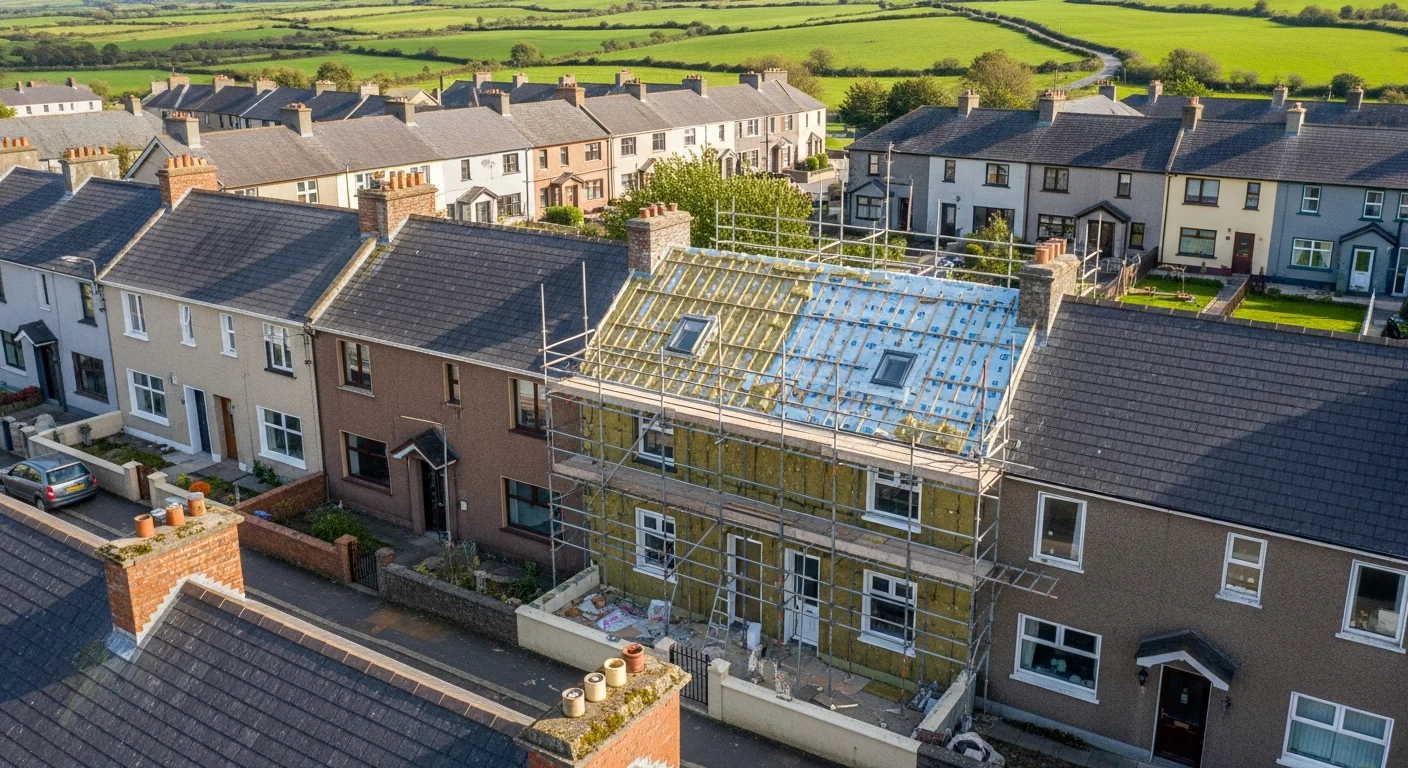
The most expensive mistake in Irish home retrofit isn't picking the wrong heat pump. It's picking the right heat pump and installing it before you've insulated the house. The pump runs flat-out trying to heat a leaky building, the electricity bill triples, and the homeowner ends up writing angry posts on Boards.ie about how heat pumps "don't work in Ireland." They do work. They just have to come last, not first.
This is the order that makes financial and physical sense for the typical Irish home — bungalow, semi-d, terrace — built any time before about 2008.
Step 1: BER assessment first
€150. Half a Saturday morning. Tells you exactly what state your house is in and which of the steps below you can skip.
Without a BER you're guessing. With one you have a written diagnosis you can use to prioritise the rest of the work and to apply for SEAI grants. There is no good reason to skip this step. Read the assessor's report — it includes a list of recommended improvements ranked by likely impact, which is essentially a free retrofit roadmap.
Step 2: Stop the heat escaping (insulation and air-tightness)
This is where the order really matters. Every euro spent on insulation before the heating upgrade is worth roughly two euros spent on insulation after. Why? Because once you've sized a heat pump or new boiler for your old, leaky house, you've locked in years of running costs based on that worse-than-necessary baseline.
The fast wins, in priority order:
- Attic insulation — biggest bang per buck. €1,000–€2,000, grant of €1,500. You'll feel it the next cold night.
- Cavity wall insulation (if you have a cavity) — €1,500–€3,000, grant of €1,700. A day's work.
- Air-tightness improvements — sealing draughts around windows, doors, attic hatch, service penetrations. Often DIY or part of insulation jobs.
- External or internal wall insulation (if you have solid walls) — €15,000–€35,000, grant up to €8,000. The big one. Decide here whether to do it now or as part of a one-stop-shop project later.
Skip step 2 at your peril.
Step 3: Stop heat escaping through windows (only if needed)
If you have single glazing or original 1980s double glazing, replacing windows is worth doing before the heating upgrade. If you have modern argon-filled double glazing or triple glazing, skip — the marginal gain doesn't justify €15,000–€25,000 of new windows.
A surprisingly common waste of money: replacing perfectly good 2005-era double-glazed windows with new units because someone said it'd "improve the BER." It will, marginally, and the payback is 30+ years.
Step 4: Now, the heating upgrade
With insulation sorted, you can size a heat pump (or replacement boiler) properly — for the new heat demand, not the old one. This typically means a smaller, cheaper unit that runs less and costs less to run.
For most homes that hit a Heat Loss Indicator of 2.0 or better after insulation, air-to-water heat pump is the right answer. €6,500 SEAI grant, lower running costs than oil/LPG/gas, no annual service contract, no fuel deliveries.
For homes still poorly insulated despite step 2 (some old solid-wall properties simply can't reach the threshold without external insulation), an efficient modern condensing boiler may be the right interim step.
Step 5: Solar PV
Solar fits naturally after the rest is done. Two reasons:
- Once you've added a heat pump, your electricity demand goes up — solar covers a meaningful share of it.
- You'll know your real, post-retrofit electricity profile, so you can size the system right.
A 4–6 kWp system with a battery is the typical sweet spot for a fully-retrofitted home. €1,800 SEAI grant, payback 7–8 years, decades of free electricity after.
Step 6: EV charger (optional)
If you've got an EV (or plan to), pop a 7 kWh charger on the wall — a small SEAI grant available, half a day's work. Pairs beautifully with solar.
What goes wrong when people skip the order
- Heat pump on an uninsulated house: electricity bills double, owner blames the technology.
- New windows on an old uninsulated house: thousands spent, BER barely moves.
- Solar before insulation: still works fine, but you've sized the system to your wasteful old usage.
- Big external wall insulation job after a recent heat pump install: you've now paid for a heat pump bigger than you need.
When a One-Stop-Shop makes sense
If you're doing most or all of the above in a single project — typically €40,000–€80,000 of work — a SEAI-registered One-Stop-Shop will manage the whole thing, sequence it correctly, handle every grant application, and net the grants off your invoice so cash flow is easier. They charge a project management fee, but they remove the coordination headache and reduce the chances of order-of-operations mistakes.
If you're doing one or two measures at a time over a few years, you don't need a One-Stop-Shop — just SEAI-registered installers for each piece, and a written plan of what's coming next.
The shortest possible advice
BER first. Insulation before heating. Heating before solar. Don't do it backwards just because the heat pump salesman called first.
CleanEnergy.ie matches you with SEAI-registered installers for every step of the journey — assessors, insulation, heat pump, solar, EV. Three quotes per category, no pressure, free for homeowners. Start with the BER if you don't know where to begin.