Charging an EV at Home in Ireland: The Honest 2026 Guide
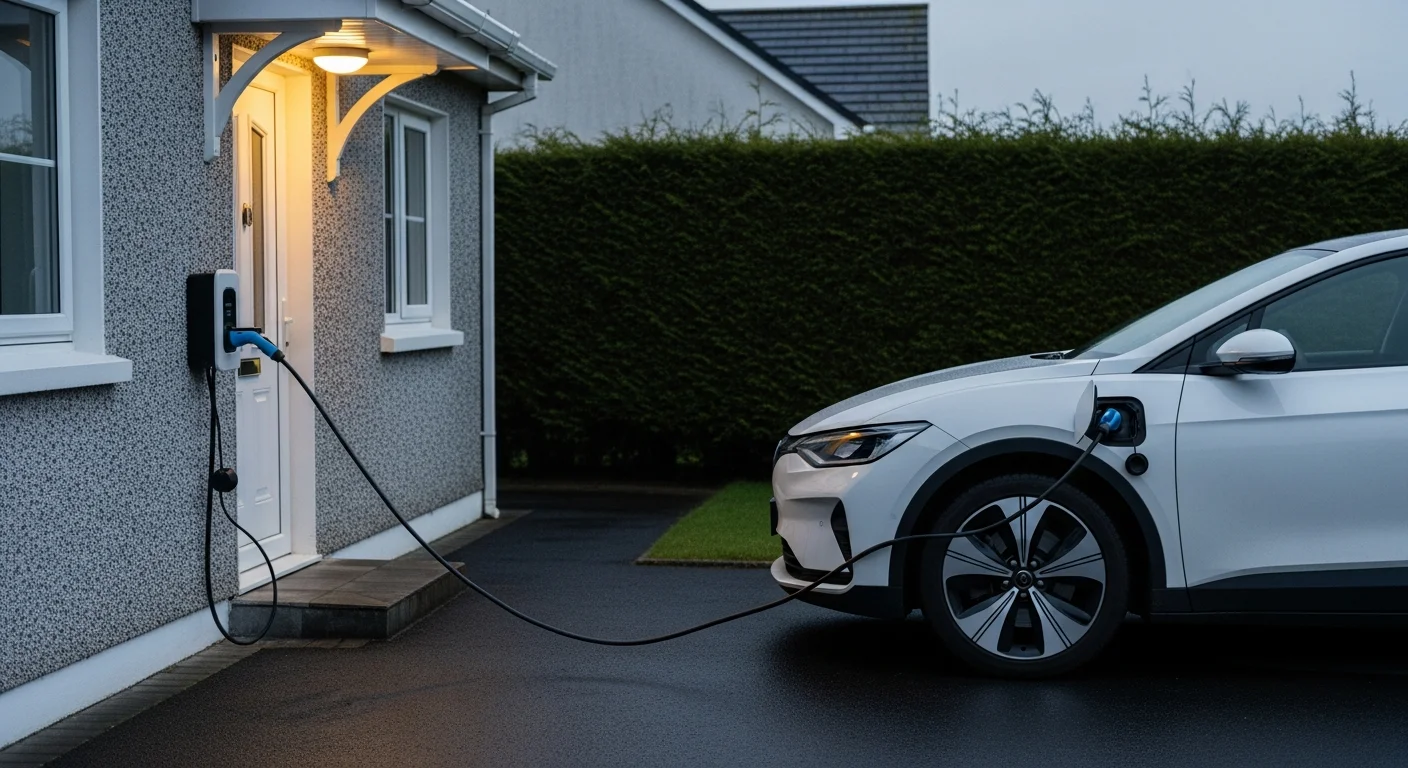
You can charge an EV from a standard three-pin socket — slowly, awkwardly, and at full daytime electricity rates. Or you can install a proper home charger, plug in once a night, and wake up to a car full of cheap electricity. Almost everyone who buys an EV ends up doing the second thing within a few months.
Here's what that actually costs in Ireland in 2026, and how to avoid the three most common mistakes.
What a home EV charger costs
A typical home EV charger install in Ireland in 2026 — wall-mounted unit, all the cabling, certified installation, paperwork — comes in at:
- Basic 7.4 kW charger, simple installation: €900–€1,200
- Smart 7.4 kW charger (Wi-Fi, app, solar-aware): €1,200–€1,700
- 22 kW three-phase charger (rare in domestic, requires three-phase supply): €1,800–€2,800
Most Irish homes are on single-phase electricity, which caps charging speed at 7.4 kW. That's enough to add roughly 40 km of range per hour — plenty to fill any normal car overnight. Three-phase is only worth pursuing if your house already has it for other reasons (workshop, large heat pump, etc.).
The SEAI grant — what it actually covers
The SEAI Home Charger Grant is €300 in 2026. Down from the higher amounts a few years ago, but still worth claiming. The rules:
- Your home must be the registered location of the EV (or you must be the registered keeper).
- You must own or have permission to install at the property — landlord consent if renting.
- The charger must be installed by an SEAI-registered EV charger installer.
- You apply before the work starts and the grant is paid to you after install.
- The grant is per property, claimable once.
It's not a huge amount, but it covers around 20–25% of a typical install. We cover the full SEAI grant picture in our 2026 grants guide.
Tethered vs untethered — pick this carefully
Tethered chargers have a permanently attached cable. Plug in, charge, unplug, hang it back on the unit. Simple, faster to use, slightly cheaper. The cable type (Type 2 — every modern EV in Europe uses this) is fixed.
Untethered chargers are a socket on the wall. You bring your own cable from the boot of the car each time. More flexible (the cable goes wherever you do), more secure (no cable left outside), and slightly more expensive.
For most households, tethered is the better choice. For households with two different EVs that might use different connectors (rare in 2026 — Type 2 is now universal in Europe), or for very tidy households who hate cables outside, untethered wins.
The smart-tariff angle that changes everything
This is where home charging stops being merely convenient and starts saving real money.
Every major Irish electricity supplier now offers a smart EV tariff with a cheap overnight rate. Typical 2026 numbers:
- Day rate: 30–35c per kWh
- Smart night rate (typically 2am–5am or 11pm–8am, varies by supplier): 8–12c per kWh
If you're charging an EV that needs 50 kWh a week to cover normal driving (around 350 km), the cost difference between day-rate and smart-night-rate charging is:
- Day-rate: around €17 a week / €870 a year
- Smart night-rate: around €5 a week / €260 a year
That's a €600/year saving for the small effort of plugging in before bed and letting the charger and tariff handle the rest. A smart charger is what makes this work — it talks to the tariff, schedules charging into the cheap window, and stops automatically when the car is full.
Solar + EV + smart tariff: the trifecta
If you already have solar panels — or you're planning them — a smart charger can be set to prioritise solar during the day. Surplus solar that would otherwise be exported is diverted into the car at zero marginal cost.
Combined with cheap overnight charging for any remaining top-up, a typical Irish EV owner with 4–5 kWp of solar can run a car for under €100 a year in electricity costs from April through September. The economics for the rest of the year are dominated by the night-rate tariff.
If you're thinking about adding a battery at the same time, it's worth knowing that the EV itself can act as a "battery on wheels" for daytime solar — a 60 kWh car battery dwarfs any home battery you'd reasonably buy.
The three mistakes to avoid
1. Buying the charger first, then asking your electrician to fit it. A lot of online charger sales come with no installation. Then you discover your consumer unit is full, or your earth bonding needs upgrading, or the cable run is 30 metres and adds €400. Always get an installer to survey first and quote the whole job.
2. Skipping the smart tariff. A "dumb" charger on a flat-rate plan is paying full whack for every kWh. The charger and the tariff together are what produce the savings — neither alone does much.
3. Putting the charger in the wrong place. Think about where the car actually parks, where the cable will need to reach, and whether you'll ever have a second EV. A charger fitted to the wrong wall is a charger you'll resent every day for the next decade.
The shortest possible advice
Get a 7.4 kW smart charger from an SEAI-registered installer, with the €300 grant applied for in advance, and switch to a smart night-rate electricity tariff the same week. Total damage: around €1,000 after grant, plus an annual electricity saving of €500–€800 versus charging during the day. Payback in 18 months, longer if you also factor in the solar self-consumption gains.
CleanEnergy.ie connects you with SEAI-registered EV charger installers across Ireland. They handle the grant paperwork, the certificate of compliance, and the ESB notification. Free for homeowners, always.