Are Solar Batteries Worth It in Ireland in 2026? An Honest Answer
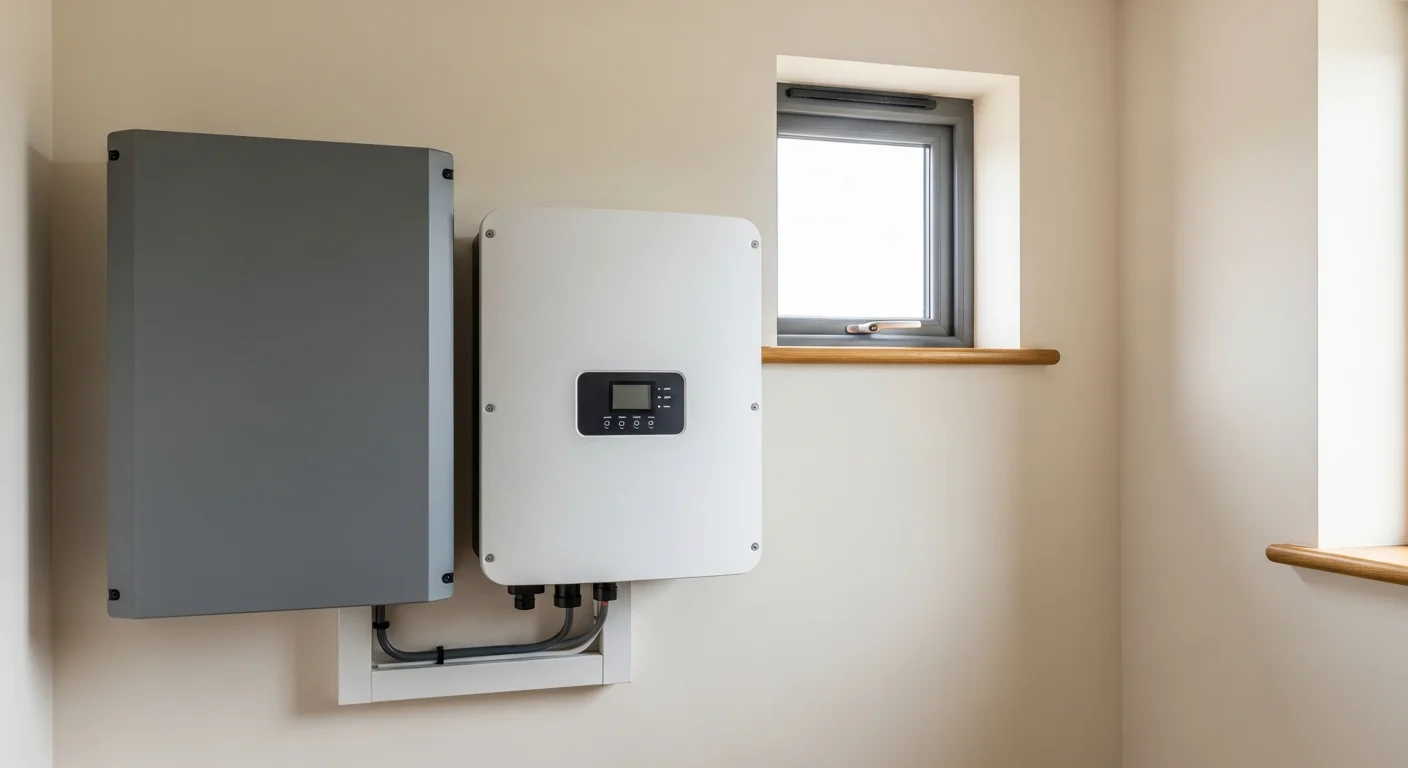
The single most common follow-up question after someone installs solar panels in Ireland is: should I have got a battery as well?
The honest answer in 2026 is: probably not — unless one of three specific things applies to you. Here's the no-spin version.
What a home battery actually does
A home battery stores the electricity your solar panels generate during the day so you can use it in the evening when the sun is down and your demand is highest. Without a battery, anything you don't use as it's generated gets exported back to the grid. With a battery, you "self-consume" more of what you make.
That's the whole pitch. Everything else — backup power during outages, time-shifting cheap night-rate electricity, "energy independence" — is a secondary benefit, and most of it is oversold.
What a battery costs in Ireland in 2026
Real installed prices, fitted on the wall in a utility room or garage, including the inverter and the labour:
- 5 kWh battery: €3,500–€4,500
- 10 kWh battery (the sweet spot for most Irish homes): €5,500–€7,500
- 15 kWh battery: €8,500–€11,000
A 10 kWh battery is the most common configuration. It'll cover a typical evening's electricity use for a family home (around 7–10 kWh between sunset and bed) without leaving headroom for an EV or a heat pump.
Important: there's currently no SEAI grant for standalone batteries in Ireland. The grant covers the solar PV install itself, and you can add a battery to that install at any point — but the battery comes out of your own pocket either way.
The honest payback maths
Here's where the picture has changed since 2023. Microgen export tariffs in Ireland are now real, standardised, and paid by every electricity supplier — between roughly 18c and 24c per kWh exported, depending on your supplier. (We cover this in detail in the microgen export tariffs guide.)
That changes the battery calculation significantly. Previously, every kWh you exported was effectively wasted, so a battery that "saved" it for your own use was paying for itself. Now, every exported kWh is worth real money — typically 70–90% of what you'd have saved by self-consuming it.
The arithmetic for a typical Irish home with 5 kWp of solar and a 10 kWh battery:
- Savings without a battery: roughly €900–€1,200 a year (bill savings + export income)
- Savings with a battery: roughly €1,200–€1,500 a year
- Extra benefit from the battery: €300–€400 a year
- Payback period on the battery alone: 15–22 years
A typical lithium battery is warrantied for 10 years, with most manufacturers projecting useful life of 12–15. So on pure economics, in 2026, the average Irish home does not earn its battery back inside its lifespan.
The three situations where a battery makes sense
- You're on a smart night-rate electricity plan. If you're paying 10–12c per kWh at night (Electric Ireland's Home Electric+, Energia Smart Drive, etc.) and 30c+ during the day, you can charge the battery overnight on the cheap rate and discharge it during expensive hours. The battery becomes a price-arbitrage machine on top of the solar contribution. Payback drops to 8–10 years.
- You have an EV and charge at home. Solar + battery + EV is a genuinely powerful combination. The battery lets you push more of your daytime solar generation into the car at night, and on a smart tariff your charging cost can drop close to zero in summer.
- You have a heat pump and good south-facing solar. Same logic. A heat pump turns electricity into heat. If your solar is generating more than the house can use during the day and your battery can store it for the evening heating cycle, you're effectively heating the house for free in summer and shoulder months.
If none of the above apply, you're better off spending the €6,000 on something else — extra solar panels, insulation, or a heat pump once the house is ready for one.
What about backup power during outages?
A battery can keep your house running during a power cut — but only if it's configured for it, and most installers don't include that by default. You need a specific inverter (a "hybrid" inverter with an EPS or backup port), the right wiring, and a critical-loads sub-panel so the battery isn't trying to power your immersion and oven during an outage.
If backup power is the main reason you want a battery, say so up front. The installer will quote a different (more expensive) configuration, and you'll be glad they did the first time the lights go out for three days in a January storm.
The shortest possible advice
If you're getting solar panels installed in 2026, ask for a quote with and without the battery. Compare the two payback periods honestly. Unless you tick one of the three boxes above (smart night tariff, EV, or heat pump), get the panels now and add the battery in a few years when prices have come down further — every solar inverter sold in Ireland today is "battery-ready".
If you do tick one of the boxes, get them both at the same time. The install is cheaper as a single job than as two visits a year apart.
CleanEnergy.ie connects you with SEAI-registered solar installers in your county who'll quote both options honestly. Free for homeowners, always.