Where Insulation Pays Back Fastest: Attic, Cavity, or External Wall?
Insulation isn't sexy. Nobody posts a photo of their new attic roll on Instagram. Nobody has a strong opinion about cavity bead at a dinner party. But pound for pound, insulation pays you back faster than anything else you can do to an Irish home — and it's the foundation everything else depends on.
Here's the honest 2026 ranking.
Attic insulation — the fastest payback in Irish retrofit
Installed cost in 2026: €1,200–€2,200 for a typical Irish semi or detached. SEAI grant: up to €1,500 (depends on house type — see the full grants guide). Net cost after grant: often €0–€700. Annual heating saving: €200–€450. Payback period: 1–3 years.
There is no other home energy upgrade in Ireland that pays back this fast. None. A heat pump pays back in 8–12 years. Solar panels pay back in 6–8. Attic insulation — done well, on a house that doesn't already have it — typically pays back inside two heating seasons.
The reason is simple physics: heat rises. If your attic is poorly insulated, you're paying to heat the underside of your roof tiles for half the winter.
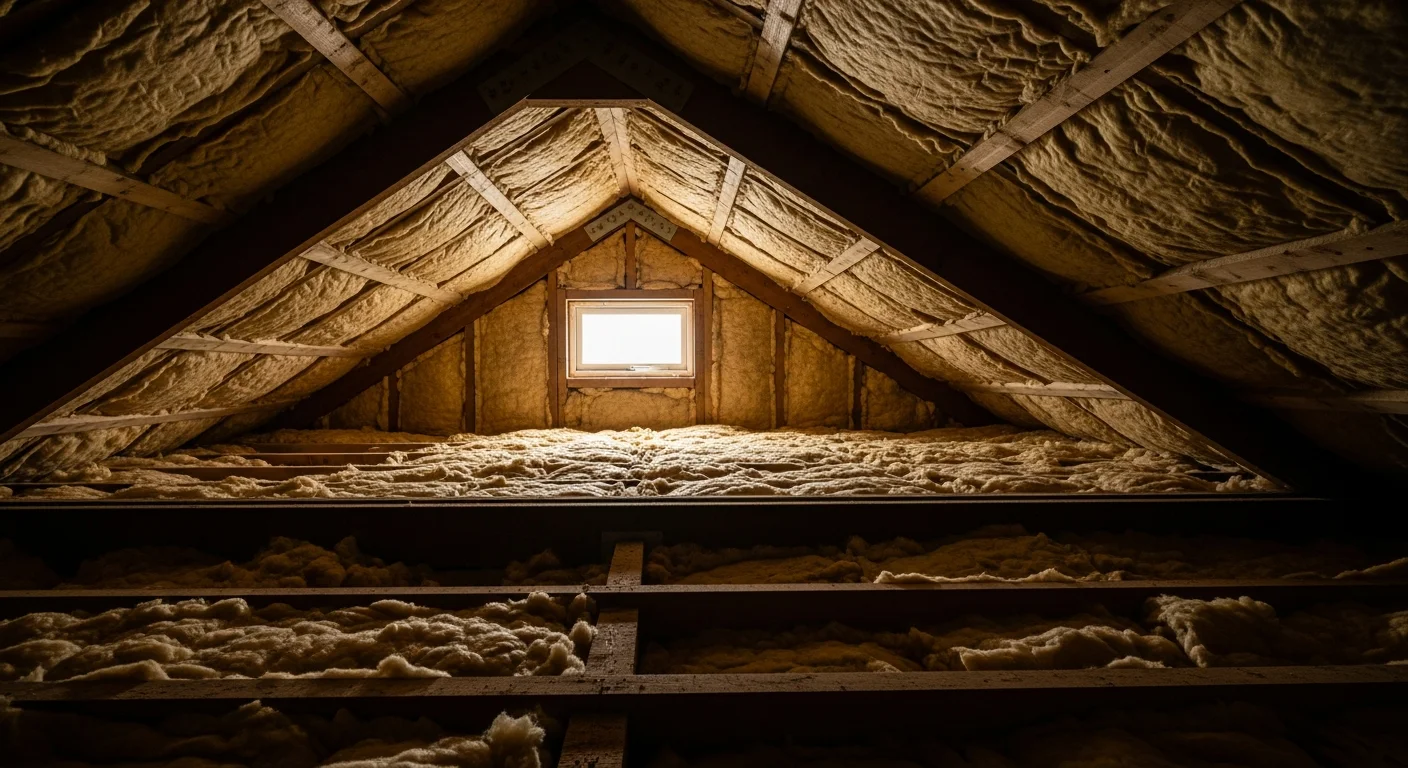
What "done well" means: at least 300mm of mineral wool (or equivalent) laid evenly across the joists, attic hatch sealed and insulated, recessed downlighters covered (or replaced with sealed LED units), eaves vents preserved so the roof can still breathe, and water tanks insulated separately.
If your house was built before 2000 and has never been topped up, attic insulation is the single highest-ROI thing you can do this year. Get a quote. Even at full retail without the grant, it pays back inside 5 years.
Cavity wall insulation — the second-fastest payback
Installed cost: €1,800–€3,500 for a typical 3-bed semi. SEAI grant: up to €1,700. Net cost after grant: often €100–€1,800. Annual heating saving: €250–€500. Payback period: 2–5 years.
If your house was built between roughly 1940 and 2005 it almost certainly has cavity walls — two skins of block with a 50–100mm gap between them. That gap is sometimes empty, sometimes partially filled with old polystyrene beads that have settled, occasionally already fully insulated.
A cavity survey (free with most quotes) tells you which one. If the cavity is empty or partial, pumping it full with bonded bead or expanding foam is a one-day job, low-mess, and pays back fast.
The catches: houses with damp problems, exposed-coast locations with driving rain, or non-standard cavity construction may need a different approach (external wall instead). A good installer will tell you if cavity isn't right for your specific house.
External wall insulation — the big one
Installed cost: €15,000–€30,000 for a typical 3-bed semi (depends on size, render finish, scaffold complexity). SEAI grant: up to €8,000. Net cost after grant: €7,000–€22,000. Annual heating saving: €600–€1,200. Payback period: 10–20 years.
External wall insulation (EWI) wraps the outside of your house in 100–150mm of insulation, then renders or clads over the top. It's the most effective wall upgrade you can do and the most disruptive — scaffold for 3–6 weeks, new render finish, windowsills extended, downpipes moved.
EWI is the right answer when:
- Your house is solid wall (pre-1940, mostly) and has no cavity to fill.
- Your BER is currently a D, E, F or G and you need to reach a B2 — EWI is often the only way to get there without losing internal floor area.
- You're doing the render anyway as part of a wider renovation.
EWI is the wrong answer when:
- Your house has a perfectly good cavity that just needs filling for a tenth of the cost.
- You're in a listed building or conservation area without planning permission.
- You're planning to sell within 5 years (the payback won't have arrived).
Internal wall insulation — for when external isn't possible
Installed cost: €4,000–€12,000 for a typical 3-bed semi. SEAI grant: up to €4,500. Net cost after grant: €1,000–€7,500. Annual heating saving: €400–€800. Payback period: 3–8 years.
Internal wall insulation is studs + insulated plasterboard fitted to the inside of your external walls. The big drawbacks: you lose around 80mm of room on every external wall, you have to remove and refit skirting boards, sockets, radiators, kitchens and curtains, and you have to redecorate.
It's used when external isn't viable — listed buildings, terraced houses without rear access, planning constraints in conservation areas, or homeowners who simply can't face scaffold.
If you have a choice between external and internal: external wins on energy performance, simplicity, and preserved interior space. Internal wins on cost and planning ease.
How insulation interacts with everything else
This is the part most homeowners skip and regret later.
Heat pumps need insulated houses. SEAI won't approve a heat pump grant unless your "Heat Loss Indicator" comes in below 2.0 W/K/m². On an uninsulated 1970s semi, that means insulation has to come first. Skipping this step is the single most expensive mistake in Irish retrofit — your heat pump will work, but it'll cost €2,500 a year to run instead of €900.
Insulation affects ventilation. A well-insulated house is also an airtight one, and that means humidity, condensation and air quality become live issues. Any retrofit going beyond attic-only needs a ventilation strategy — extract fans at minimum, MVHR (mechanical ventilation with heat recovery) for whole-home retrofits.
Insulation should usually come before solar. Counterintuitively. The reason: insulation reduces your house's total energy demand, which makes the eventual solar system smaller, simpler and cheaper. (Though if your roof is going up for re-tiling anyway, doing solar in the same scaffolding visit can flip the economics.)
The full sequencing is covered in detail in the right order to do a whole-home retrofit.
The shortest possible advice
If you do only one thing to your Irish home this year, do attic insulation. €1,500 to install, mostly grant-funded, pays itself back in a single winter, and quietly saves you €300+ every year for the next 30.
If you do two things, add cavity wall insulation (assuming the survey says yes). Same logic.
If you're doing a whole-home retrofit, insulation is the first measure — the one everything else depends on. Get the BER, get insulation specced and priced, then layer heat pump, solar, ventilation and the rest on top.
CleanEnergy.ie connects you with SEAI-registered insulation installers across Ireland — attic, cavity, internal and external — all including the grant paperwork. Free for homeowners, always.