SEAI One-Stop-Shop vs Managing Your Own Retrofit: Which Saves You More?
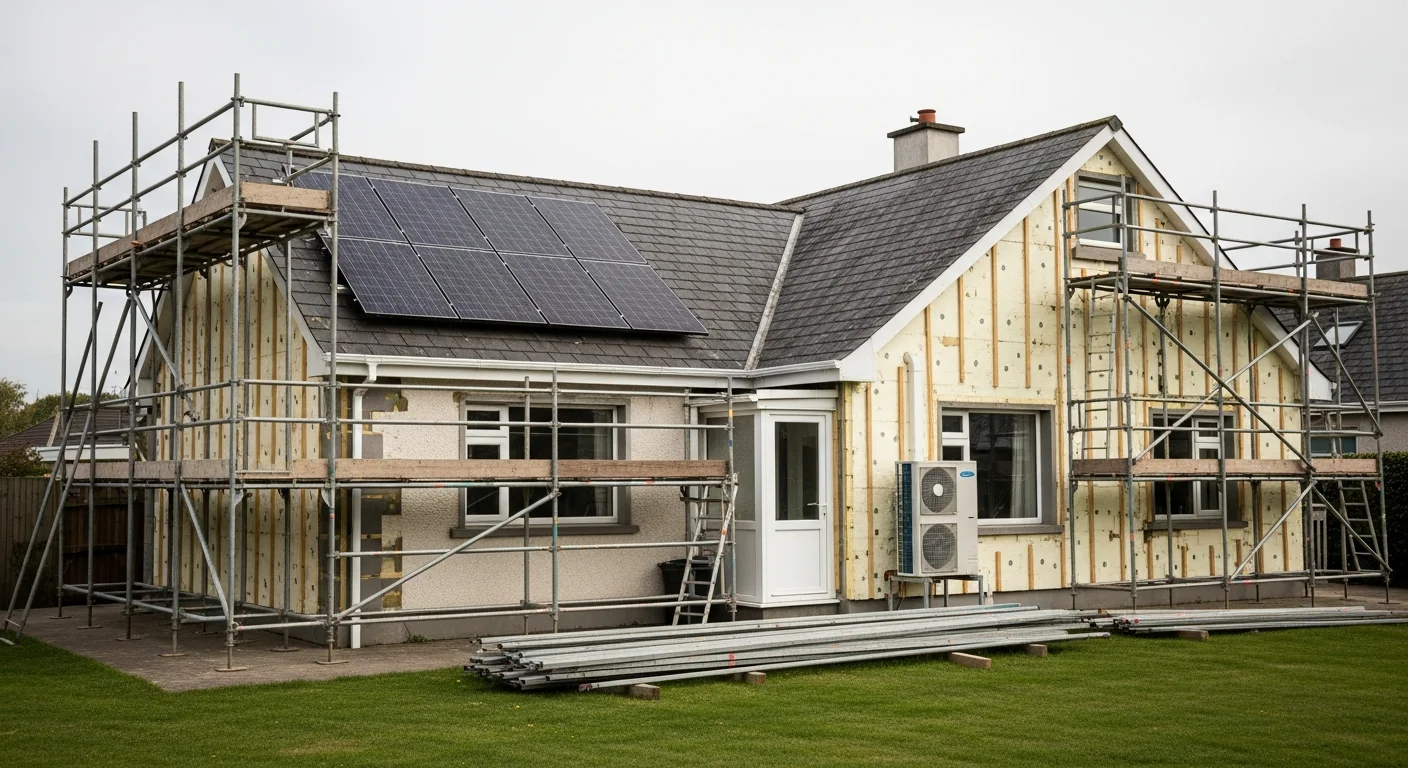
If you're planning a serious retrofit — heat pump, insulation, solar, the lot — you have two basic routes in Ireland today.
Route 1: Sign up with an SEAI-registered One-Stop-Shop. They survey, design, project-manage, and deliver the whole package. Grant comes off the bill.
Route 2: Get quotes from individual SEAI-registered installers for each measure (insulation, heat pump, solar), coordinate them yourself, apply for grants yourself, get reimbursed after each is complete.
Both are legitimate. Both produce a B2-rated house at the end if done well. They cost different amounts of money, time, and stress. Here's the no-spin comparison.
What a One-Stop-Shop actually does
A One-Stop-Shop (OSS) is a single company — there are around 25 of them in Ireland, all listed on seai.ie — that holds your hand through every step:
- Initial home energy assessment
- Design of the upgrade package (which measures, in what order)
- All sub-contractors (insulation, electrical, plumbing, BER assessor)
- All paperwork (grant applications, building control if needed, BER certificates)
- A single invoice, with the SEAI grant netted off so you only pay the difference
- A single point of contact for the whole project
The trade-off is a project management fee, baked into the final price. Most OSSes don't itemise it as a line — it sits inside the overall quote. Industry-standard is roughly 10–18% on top of the underlying trades' costs, varying by OSS and project complexity.
What "DIY-managed" actually looks like
You contract directly with each SEAI-registered installer:
- Pre-works BER assessor (€150, partially grant-aided)
- Insulation contractor (attic, cavity, external as applicable)
- Heat pump installer (with a Technical Assessment first)
- Solar PV installer
- Window glazing if needed
- Post-works BER assessor
You apply to SEAI yourself via the Better Energy Homes scheme. You pay each installer in full on completion, then claim back the grant (4–8 weeks for the cheque to land).
You're the project manager. You sequence the works. You arrange access, deal with the snags, hold each trade to their dates, chase the BER paperwork.
The real cost comparison
Take a typical 1970s detached home in Meath going from a D2 to a B2. The works package: external wall insulation, attic top-up, air-to-water heat pump, 4 kWp solar PV, radiator upgrade, MVHR ventilation, post-works BER.
The underlying trade cost is approximately the same either way — somewhere in the €55,000–€70,000 range before grants. Grants total around €18,000–€22,000. Net cost to homeowner:
- One-Stop-Shop: €42,000–€55,000 (including PM fee, after grants netted off invoice)
- DIY-managed: €37,000–€48,000 (after grants reimbursed)
The headline saving on the DIY route is real — typically €5,000–€8,000 on a project this size. Whether that saving is worth the work is the question.
What you give up either way
Going DIY, you give up:
- Around 80–120 hours of your time across 6–12 months — phone calls, site visits, scheduling, follow-ups
- The cash flow benefit (you pay each trade in full and wait weeks for the grant)
- A single accountable point of contact if something goes wrong between trades (e.g., the insulation guys nicked the cable the electrician left out — who pays?)
- One unified design — you're making sure each measure interlocks with the others (insulation must precede heat pump; ductwork routes must work for both heating and ventilation)
Going OSS, you give up:
- That €5,000–€8,000 in PM fee
- Choice of specific contractors (the OSS uses its own panel)
- Some pricing transparency (the breakdown is less granular than separate trade invoices)
- Speed sometimes — popular OSSes have waiting lists of 6–9 months
When the One-Stop-Shop is clearly the right choice
- You work full-time, have small kids, or otherwise have no realistic 100-hour budget for coordination.
- You're targeting a B2 specifically for a green mortgage rate or a higher BER, with a fixed deadline.
- The project is complex (heritage features, structural work, ventilation strategy) and you don't want to learn building physics from scratch.
- You have the cash flow to pay slightly more for less hassle.
When DIY-managed is clearly the right choice
- You're doing it in stages over 2–4 years rather than as one big push.
- You're doing a smaller scope (e.g., just insulation + solar, no heat pump) where coordination is genuinely simple.
- You have a trusted relationship with one or two installers already.
- You're cost-sensitive and have the time and temperament to project-manage.
The hybrid that often works best
For most Irish homeowners we talk to, the optimal split is:
- Get a BER assessment as the first step (€150). This tells you exactly what your house needs and in what retrofit order.
- Do the easy wins yourself — attic insulation, solar PV, EV charger. These are simple one-installer jobs with predictable costs.
- Use a One-Stop-Shop only for the complex parts — typically external wall insulation, heat pump, MVHR — where the integration genuinely matters and the design choices are interlinked.
You get the cost savings on the simple stuff and the expertise on the hard stuff. The total comes in roughly €3,000 below a full-OSS package, with most of the convenience preserved.
The small print
OSSes are SEAI-registered, but quality varies. Ask for three references from completed projects in your county, and ring them. Ask "would you use them again?" and listen carefully to the pause before the answer.
DIY-managed grants are not retrospective. You must apply before work starts. Get the BER, get the heat pump Technical Assessment, then apply — not after.
Mixing OSS and Better Energy Homes for the same measure isn't allowed. You pick a route per measure. You can do attic insulation under BEH and the heat pump via an OSS, but you can't apply for both grants on the same item.
The shortest possible advice
If your project is big, complex, and time-pressured, use a One-Stop-Shop and pay for the convenience. If your project is staged, simpler, or you have the time, manage it yourself and keep the €5,000+. For most Irish homeowners doing a full retrofit, the hybrid — DIY for the easy bits, OSS for the integrated bits — comes out best.
CleanEnergy.ie connects you with SEAI-registered installers for every individual measure (insulation, solar, heat pump, EV charger, windows). If you decide an OSS is the right call for your project, SEAI's official list at seai.ie is the place to start. Free for homeowners, always.