Clean Energy in Ireland: A Plain-English Introduction for Homeowners
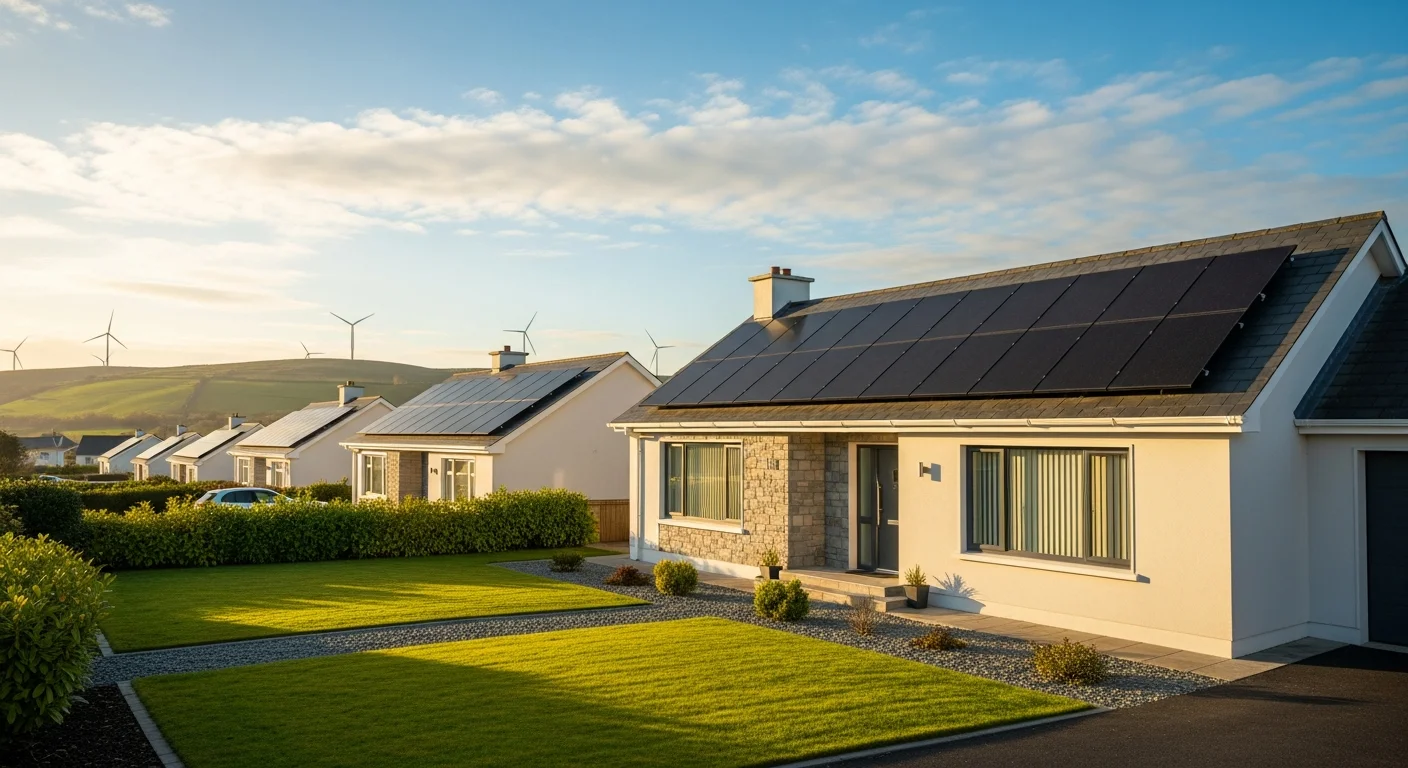
If you've watched the news lately, you've heard the phrases. Net zero. Carbon neutral. Renewables. Retrofit. BER. Heat pumps. Microgen. EVs. Dynamic tariffs.
It can feel like a wall of jargon, designed by people who already understand it for people who already understand it. This piece is the opposite. It's the calm, jargon-light explanation of what "clean energy" actually means in an Irish context, why the country is moving toward it, and what an ordinary homeowner can realistically do — without needing to remortgage the house.
What we mean by "clean energy"
Clean energy is electricity or heat produced without burning fossil fuels — coal, oil, peat, or natural gas. The two main sources you hear about in Ireland are wind (turbines onshore and offshore, mostly in the west and along the coasts) and solar (panels on roofs, fields, and increasingly large solar farms). A small but growing share also comes from biomass, hydro, and waste-to-energy.
The reason it's called "clean" is that, once a turbine or panel is built and installed, generating each unit of energy from it produces effectively no carbon dioxide. Compared to a gas-fired power station, a wind turbine produces less than 2% of the lifetime emissions per unit of electricity.

Why Ireland, in particular, is going hard at this
Three reasons, all reinforcing each other.
The legal commitment. Ireland has bound itself in law to cut greenhouse-gas emissions by 51% by 2030 (vs 2018) and reach net-zero by 2050. The detail sits in the Government's Climate Action Plan. Electricity generation is one of the biggest single emitters, so cleaning it up is the fastest lever the country has.
The wind. Ireland sits in one of the windiest parts of Europe. Onshore wind already supplies roughly a third of our electricity in a typical year — EirGrid publishes the live mix here. Offshore wind, which is only now starting in earnest, has the potential to multiply that several times over. We have a natural advantage most countries would envy.
The price. Ireland has had the highest household electricity prices in the EU for several years running. A big chunk of that is the cost of imported gas. Every megawatt of wind or solar we generate at home is a megawatt we don't have to pay foreign suppliers for. Cheaper at the wholesale level eventually means cheaper for households, even if the route is slow — and the new dynamic electricity tariffs landing on 1 June 2026 are one of the more immediate ways that saving reaches your bill.
The terms that keep coming up
A short glossary of the words you'll see in every article, grant scheme, and quote you ever receive:
- kWh (kilowatt-hour) — a unit of energy. Roughly: running a 1 kW heater for an hour. A typical Irish home uses about 4,200 kWh of electricity a year.
- BER (Building Energy Rating) — an A-to-G grade for how energy-efficient your home is. A is best, G is worst. The Irish average sits around C/D.
- Retrofit — upgrading an existing home to make it warmer and more efficient: insulation, windows, heat pump, ventilation, solar. Often done in stages.
- Heat pump — a device that moves heat from outside (air or ground) into your home. Three to four times more efficient than a gas or oil boiler. Best paired with a well-insulated home.
- Solar PV — panels that turn sunlight into electricity. Different from solar thermal, which heats water.
- Microgen (microgeneration) — generating your own electricity at home, usually from solar. Excess can be sold back to the grid.
- Export tariff — what an electricity supplier pays you for the kWh you send back to the grid.
- SEAI — Sustainable Energy Authority of Ireland. The government body that runs most of the grant schemes.
- One-Stop-Shop — an SEAI-registered company that manages an entire retrofit project for you, from BER assessment to final paperwork.
- EV (electric vehicle) — a car powered by a battery rather than petrol or diesel.
- Dynamic tariff — an electricity plan where the price changes through the day depending on supply and demand. Cheap when the wind is blowing, expensive at the evening peak.
If a quote or article uses a word that isn't on that list, it's reasonable to ask the installer to define it before you sign anything.
What a homeowner can actually do
There's no single "right" first step — it depends on your house, your budget, and how long you plan to stay. But broadly, the things that move the needle for an Irish household, in rough order of bang-for-buck, are:
1. Get a BER assessment. €150–€250. It's the X-ray of your house. Until you have one, every other decision is guesswork. SEAI grants and most retrofit decisions start here — our plain-English BER guide walks through what the report actually tells you.
2. Sort the obvious heat losses. Attic insulation and cavity wall insulation are the cheapest fixes per euro saved. SEAI grants cover a meaningful chunk. Often pays back in 3–5 years. The detail of which type pays back fastest is in our insulation comparison.
3. Sort airtightness and ventilation. Less glamorous than a heat pump, but a draughty house will defeat any heating system you fit afterwards.
4. Replace the heating system. A heat pump is the modern default for a well-insulated home. An oil or gas boiler in a leaky home will keep costing you money forever. The honest heat pump vs boiler comparison covers when the swap actually makes sense.
5. Solar panels (PV). Now genuinely worth doing in Ireland — the maths shifted around 2024 when export payments became standard. A typical 4 kW system runs €6,000–€9,000 installed after grant, paying back in 6–9 years. See our 2026 solar cost breakdown and how export tariffs really work.
6. EV when your current car wears out. Don't scrap a working petrol car early — the embedded carbon is too high. But when it's time for the next car, the running-cost difference is large, especially if you have solar or a smart tariff. The home EV charger guide covers the SEAI grant and the smart-charging angle.
7. Smart or dynamic tariff. If you have a smart meter (most new Irish homes do), you can shift heavy appliance use to cheap hours. Real savings, no upfront cost — and 1 June 2026 brings a new wave of dynamic tariffs from every supplier.
You don't have to do all of these. You don't have to do any of them this year. But knowing the rough order helps avoid the most expensive mistake — fitting a heat pump in a draughty house and then wondering why the bills haven't dropped.
You're not doing it alone
Grants exist for most of the steps above, and they're not small. The SEAI runs schemes covering anywhere from €600 (an EV charger) to €25,000 (a deep retrofit). The eligibility rules change each year and the paperwork can be heavy — which is exactly why the One-Stop-Shop model exists, and why getting at least three written quotes from registered installers is so important. Our plain-English SEAI grants guide for 2026 lays out what you can actually claim.
That's what CleanEnergy.ie was built for. You tell us what you're thinking about, we match you with vetted installers in your area, you get three quotes to compare. No cold-calling, no obligation. If you'd rather see how the matching works first, here's the short version.
The bigger picture
Ireland's energy story over the next ten years is going to be a steady shift from imported gas and oil to home-grown wind, solar, and electrified heating. It's going to happen whether you take part or not. The households that move first generally end up with lower bills, a warmer house, and a more comfortable place to live — long before the rest of the country catches up.
The hardest part, honestly, is getting started. Once you've had your BER done and a couple of conversations with installers, the whole thing stops feeling abstract and starts feeling like a series of practical, costed decisions. That's where the calm, no-nonsense version of clean energy lives — and where most of the savings hide.